

STRUCTURAL GENOMIC TESTING FOR CANCER
One sample. One test.
A clearer view of cancer.
CytoTerra® helps clinicians and scientists see the changes that shape a patient’s diagnosis and treatment, faster and more completely than legacy testing. One actionable report. Results in days, not weeks.
Peer-reviewed publications

CLIA-registered laboratory


Published with Fred Hutch, University of Washington, Mayo Clinic, and others
WHY IT MATTERS
Until now, the full picture arrived in pieces.
Karyotype, FISH, and microarray each answer part of the question. They can mean separate samples, separate labs, and separate reports that arrive on different, extended timelines. When a sample runs short, a patient may face another draw or biopsy while the clock keeps running.
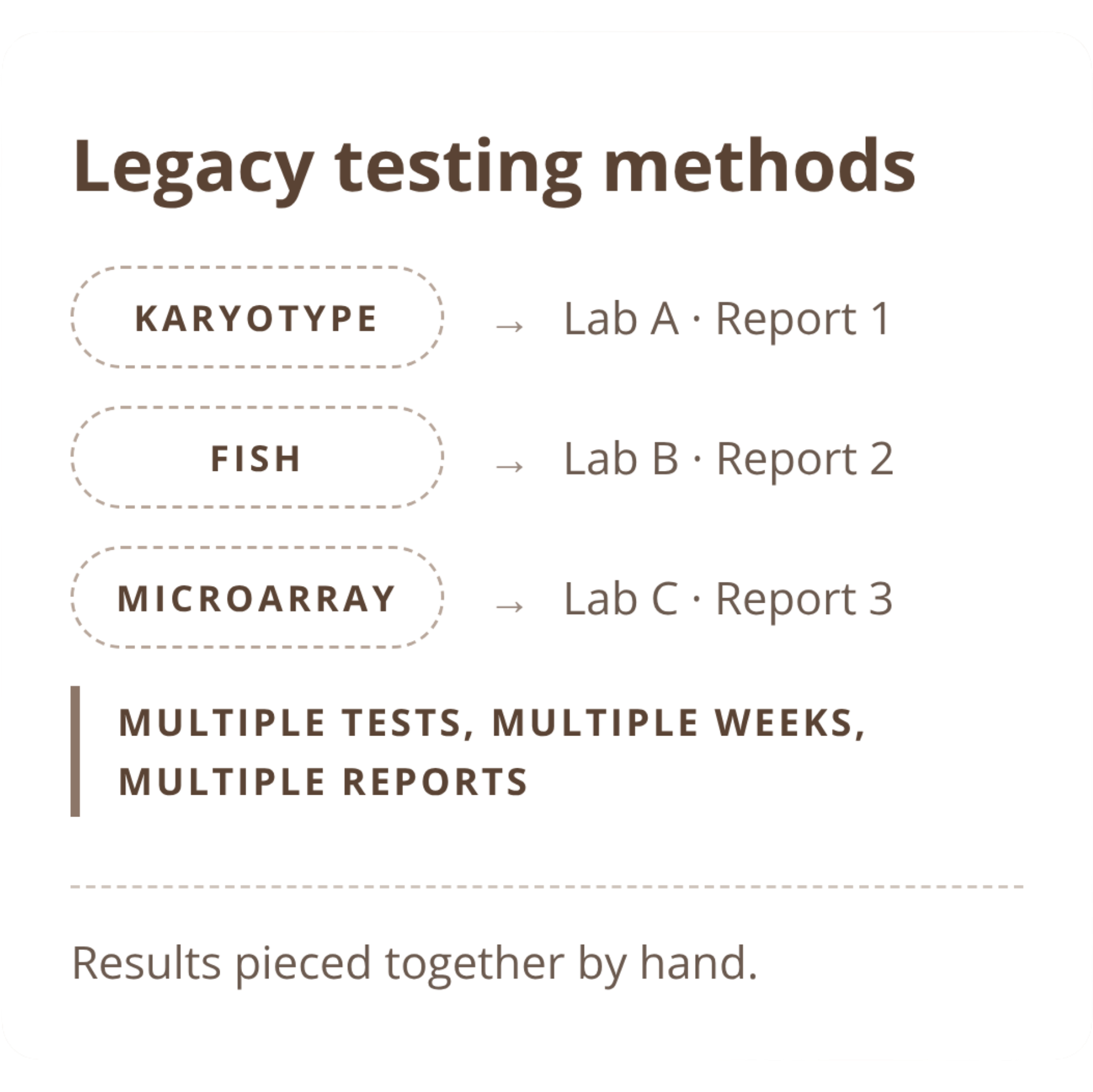
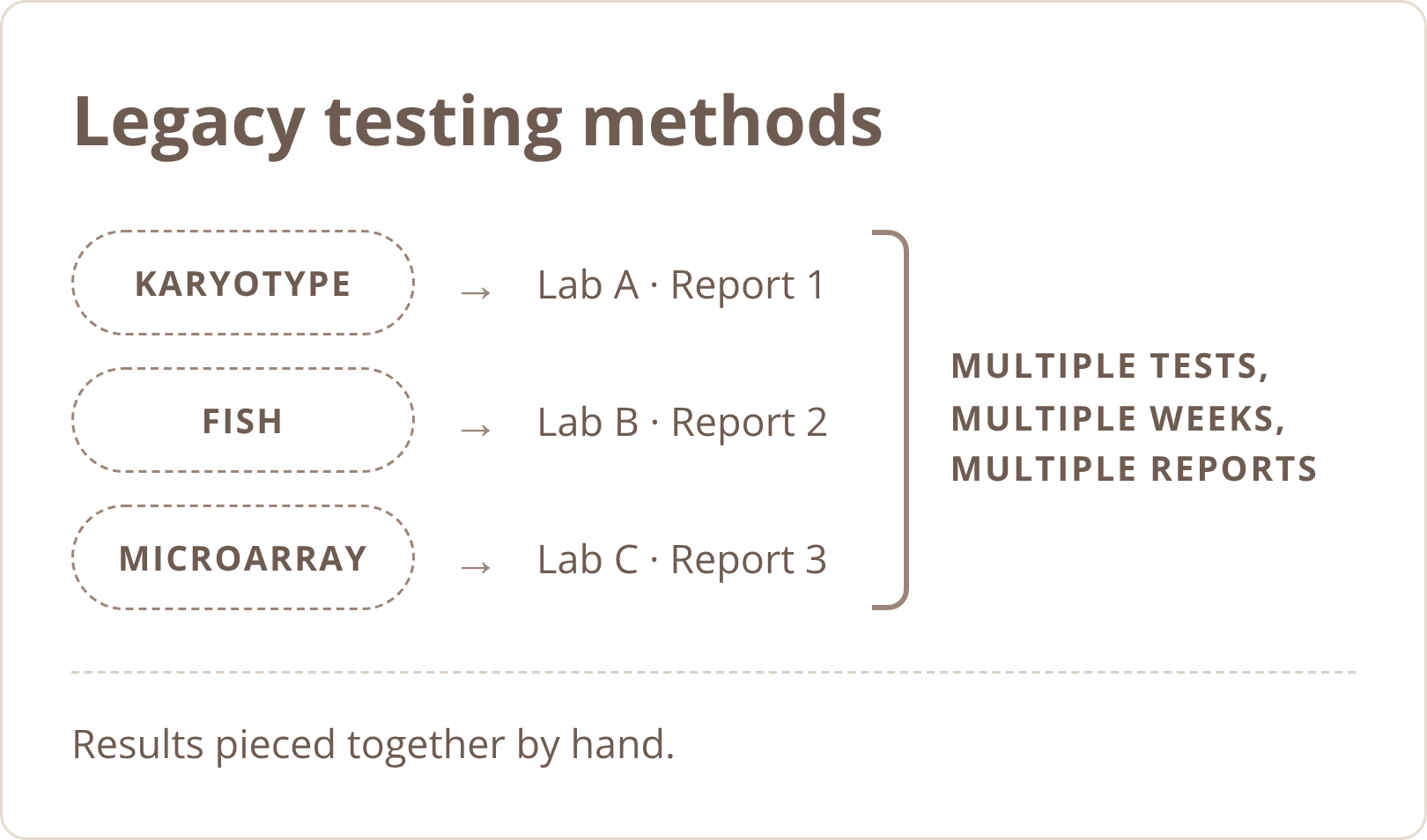
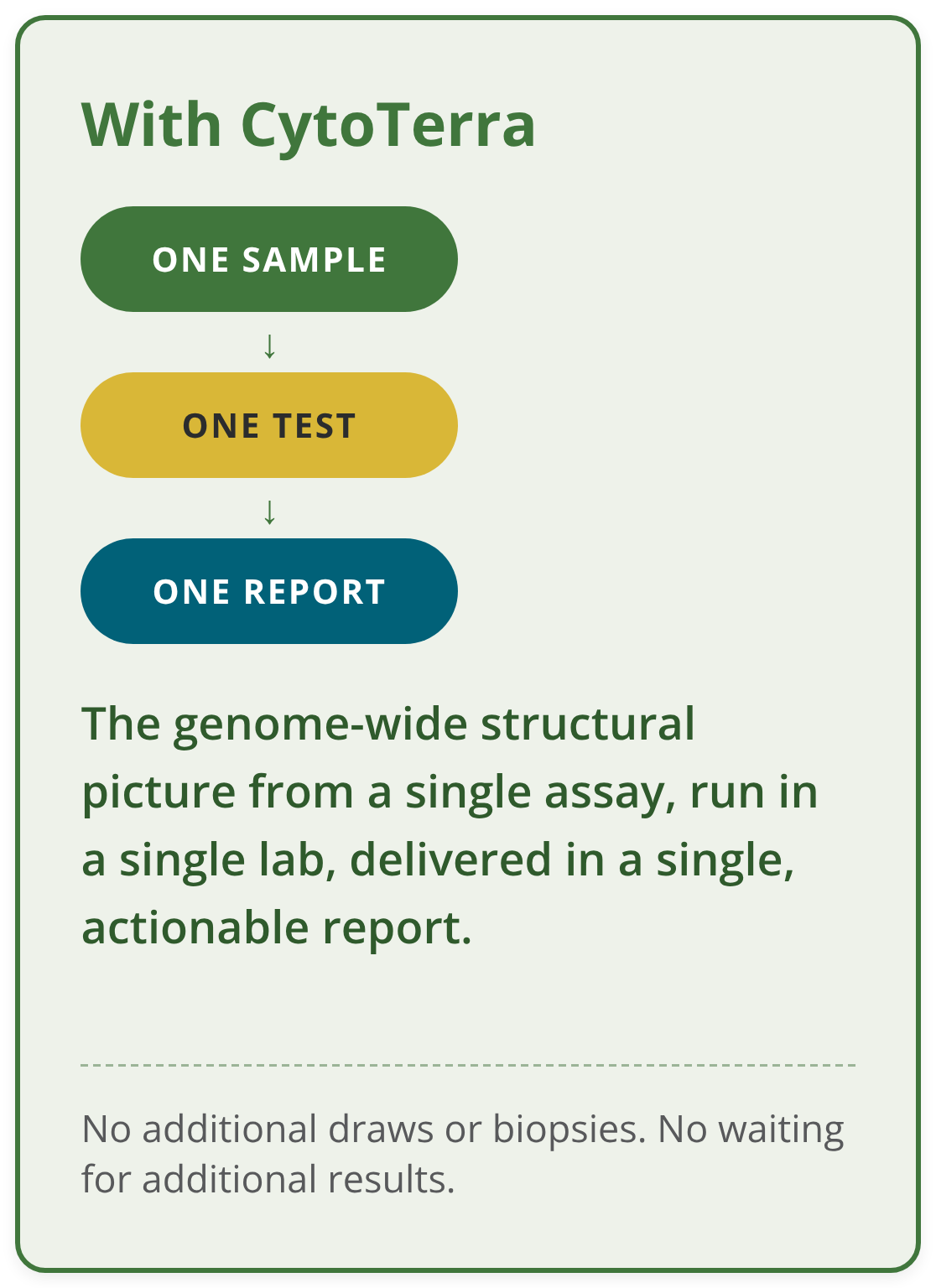
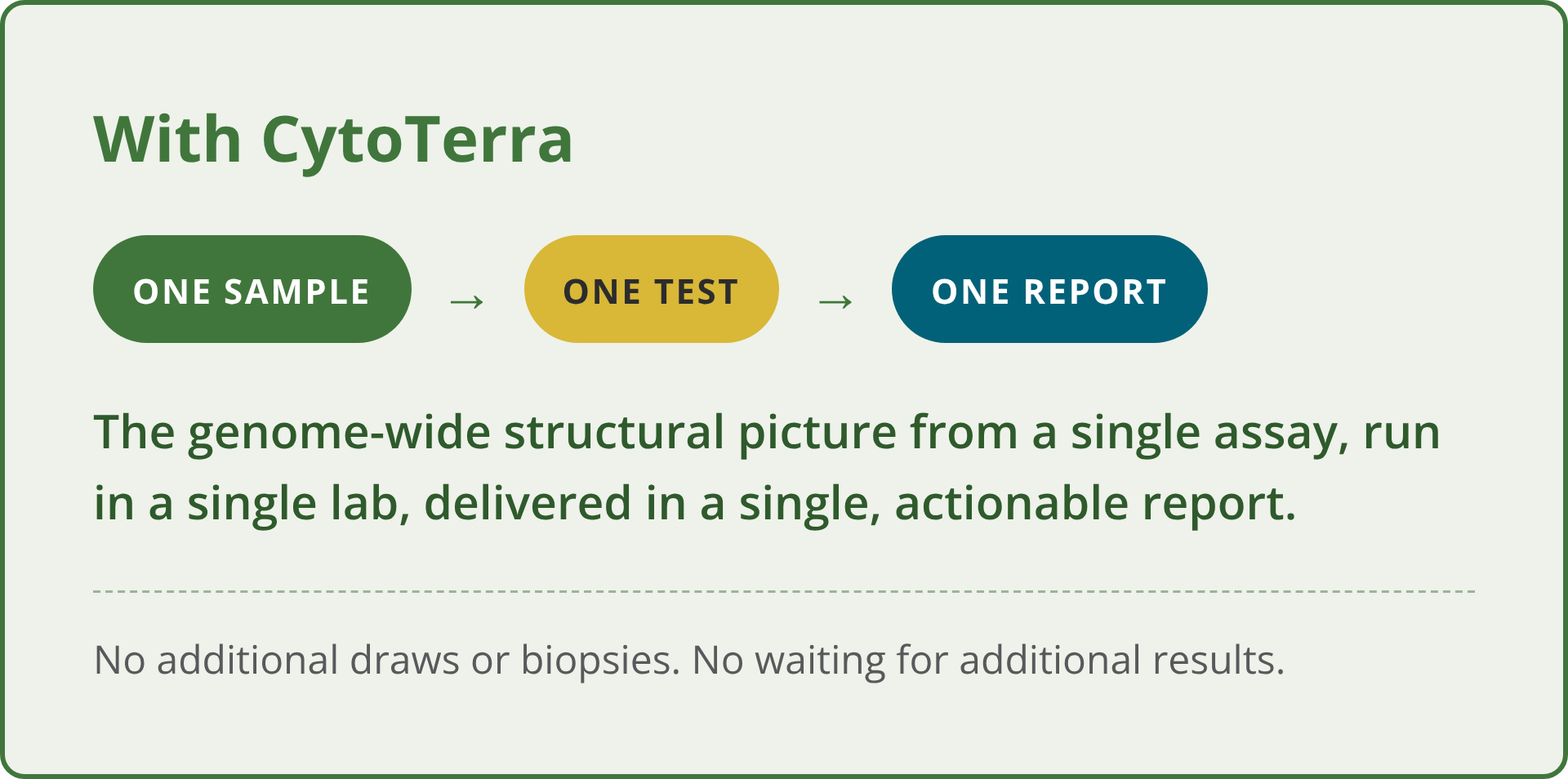
“By consolidating what would normally be multiple standard-of-care tests into one streamlined workflow, [this test] reduces laboratory burden, cuts turnaround times, and lowers overall costs.”
Fang et al., The Journal of Molecular Diagnostics, 2025 · University of Washington
CytoTerra is a laboratory service, not a kit. Samples come to us. Answers go back to you.
SEE THE STRUCTURAL PICTURE
Legacy methods look for trees in the forest. CytoTerra maps the entire landscape.
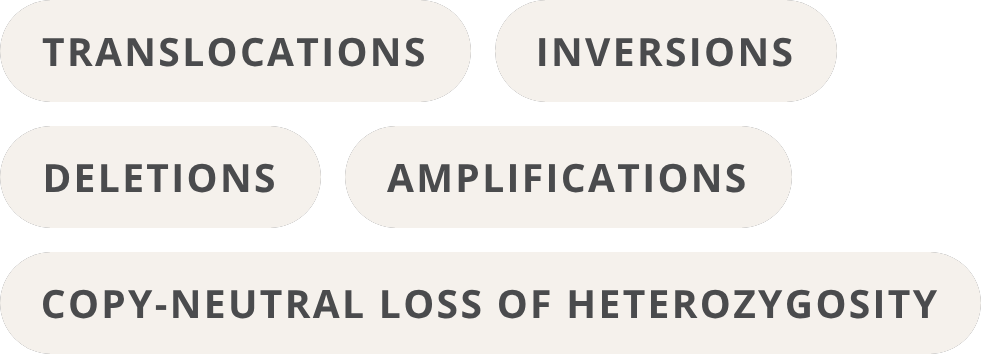
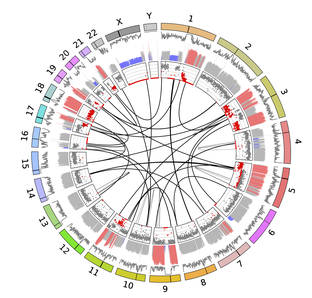

FISH and sequencing panels look for known changes, one tree at a time, and karyotype sees the forest only in outline. CytoTerra maps the entire landscape at high resolution, showing where chromosomes have broken, rearranged, and rejoined.
Example: structural changes found in a single myeloma patient’s cancer.
BUILT ON EVIDENCE
Validated through peer-reviewed research.
100%
of ELN 2022 risk-defining variants detected in 48 AML samples
Fred Hutch · Haematologica, 2026
4 of 5
myeloma patients had clinically relevant findings beyond FISH
Mayo Clinic · American Journal of Hematology, 2026
12
variants legacy tests missed, across 123 patients
University of Washington · The Journal of Molecular Diagnostics, 2025
“The absence of this information may have influenced the initial treatment decision.”
Kandasamy et al., Mayo Clinic, on a myeloma patient whose high-risk MYC::IGH rearrangement was not identified at diagnosis. American Journal of Hematology, 2026
FEATURED PUBLICATION · Haematologica · 2026
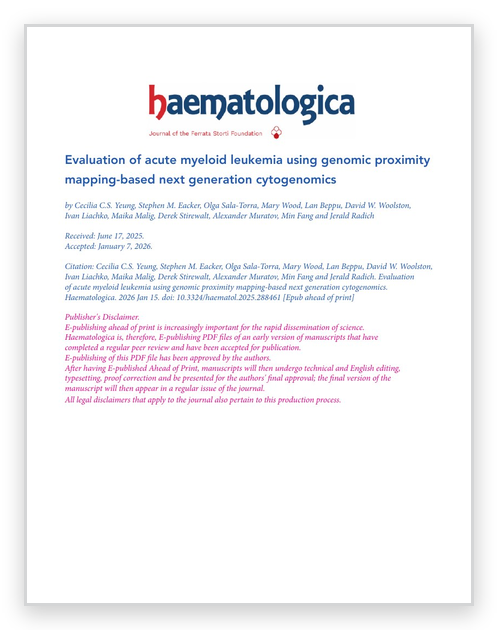
Evaluation of acute myeloid leukemia using genomic proximity mapping-based next generation cytogenomics
Yeung et al. · Fred Hutchinson Cancer Center and University of Washington
CytoTerra detected every ELN 2022 risk-defining variant that legacy testing found, plus clinically significant changes missing from the original reports.
BUILT FOR THE PEOPLE WHO RELY ON IT
What CytoTerra means for you.

HEMATOLOGY AND PATHOLOGY EXPERTS
Is it clinically meaningful, and can I trust it?
Genome-wide structural findings, concordance with established risk classification, and the published data behind every insight.

TREATING ONCOLOGISTS
Is it actionable and will it help me decide what comes next?
Clear structural findings in a single report, from the sample you already collected. Actionable variants captured across the whole genome.
PHARMA AND BIOMARKER TEAMS
Is it scalable and will it work in my program?
Standard sample collection for prospective studies, and the ability to test archived samples you already have.
BUILT FOR CLINICAL REALITY
Built for real-world samples.
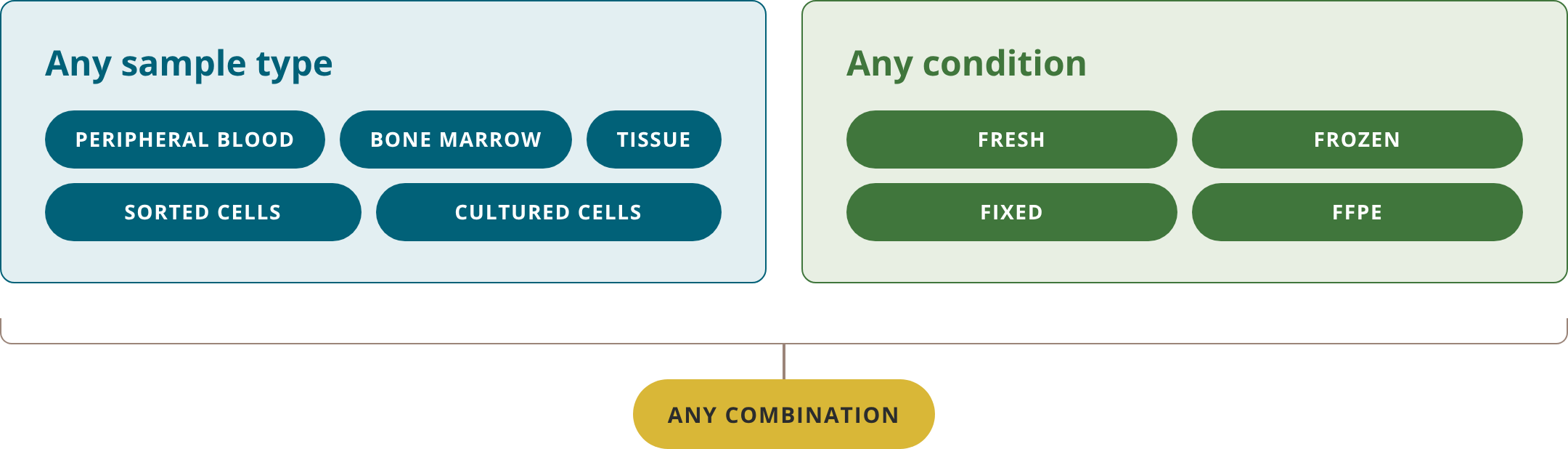
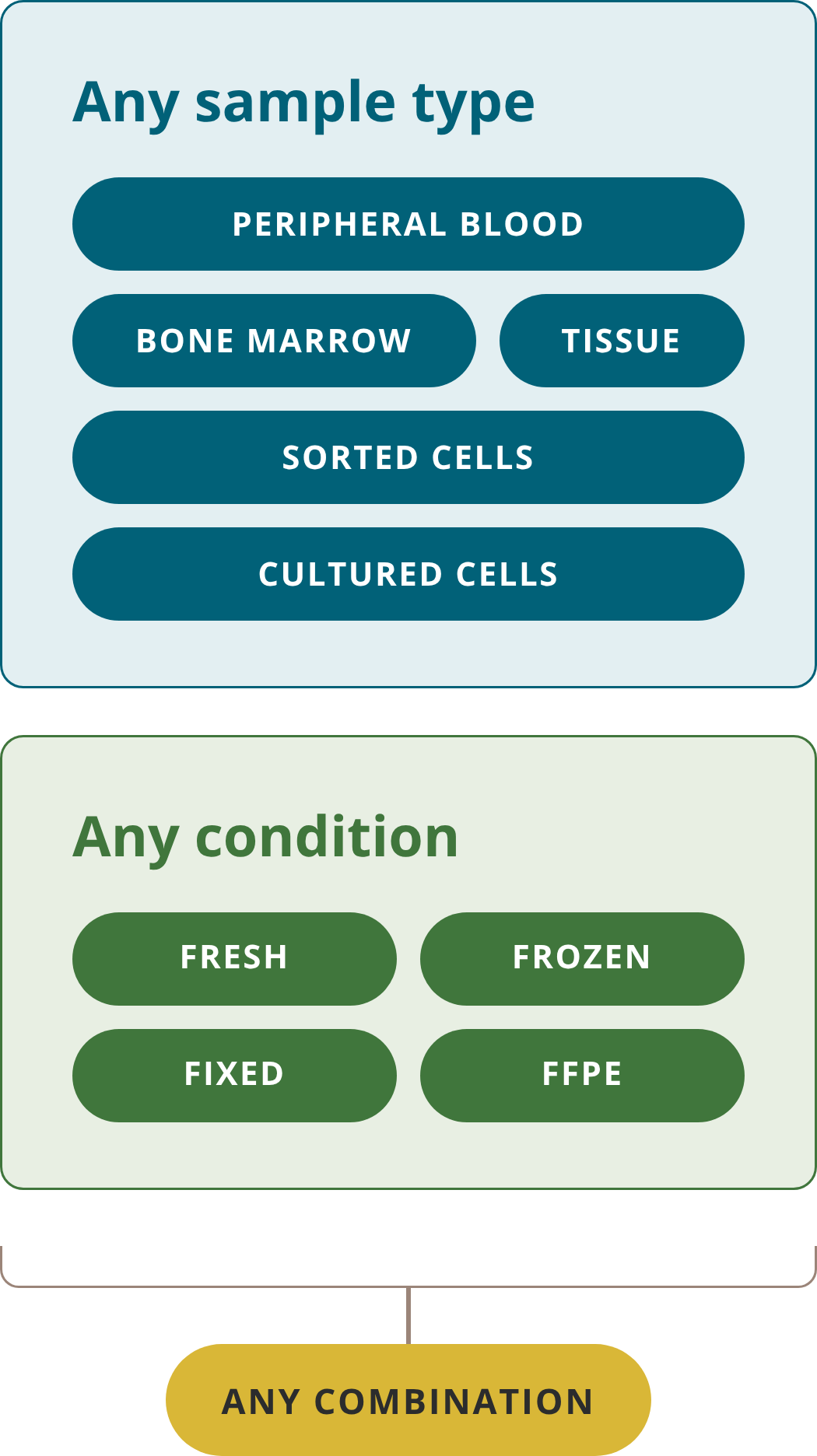
No special sample requirements. Designed to work with the samples clinicians and trial teams already collect. Samples that are years old, or less than perfect, still return results.

FOR PHARMA AND BIOMARKER TEAMS
Let us prove it on your samples.
Start with a small pilot on samples you already have. We will show you what CytoTerra finds, then you decide what comes next.
THE TECHNOLOGY
How we see genomic structure.
Genomic Proximity Mapping® (GPM) captures which parts of the genome sit physically close together inside the cell. When a chromosome breaks and rejoins in cancer, those neighbors change. Our analysis reads that change as a structural finding.

DNA in its natural structure
Chromosomes are fixed in place, as they sit in the cell.

Proximity captured
Pieces of DNA that are in proximity are linked together.

Sequenced and analyzed
Our software turns those links into a genome-wide map.

Structural findings
Changes in the map reveal what has moved, flipped, or been lost.

FOCUSED ON WHAT MATTERS IN CANCER
A clearer view starts with a conversation.
CytoTerra is a clinical diagnostics company bringing structural genomic testing out of the research lab and into cancer care. Every test runs in our own CLIA-registered laboratory in Seattle.
Tell us a little about what you need, and the right person on our team will follow up. Prefer email? info@cytoterra.com
Please do not send patient information.